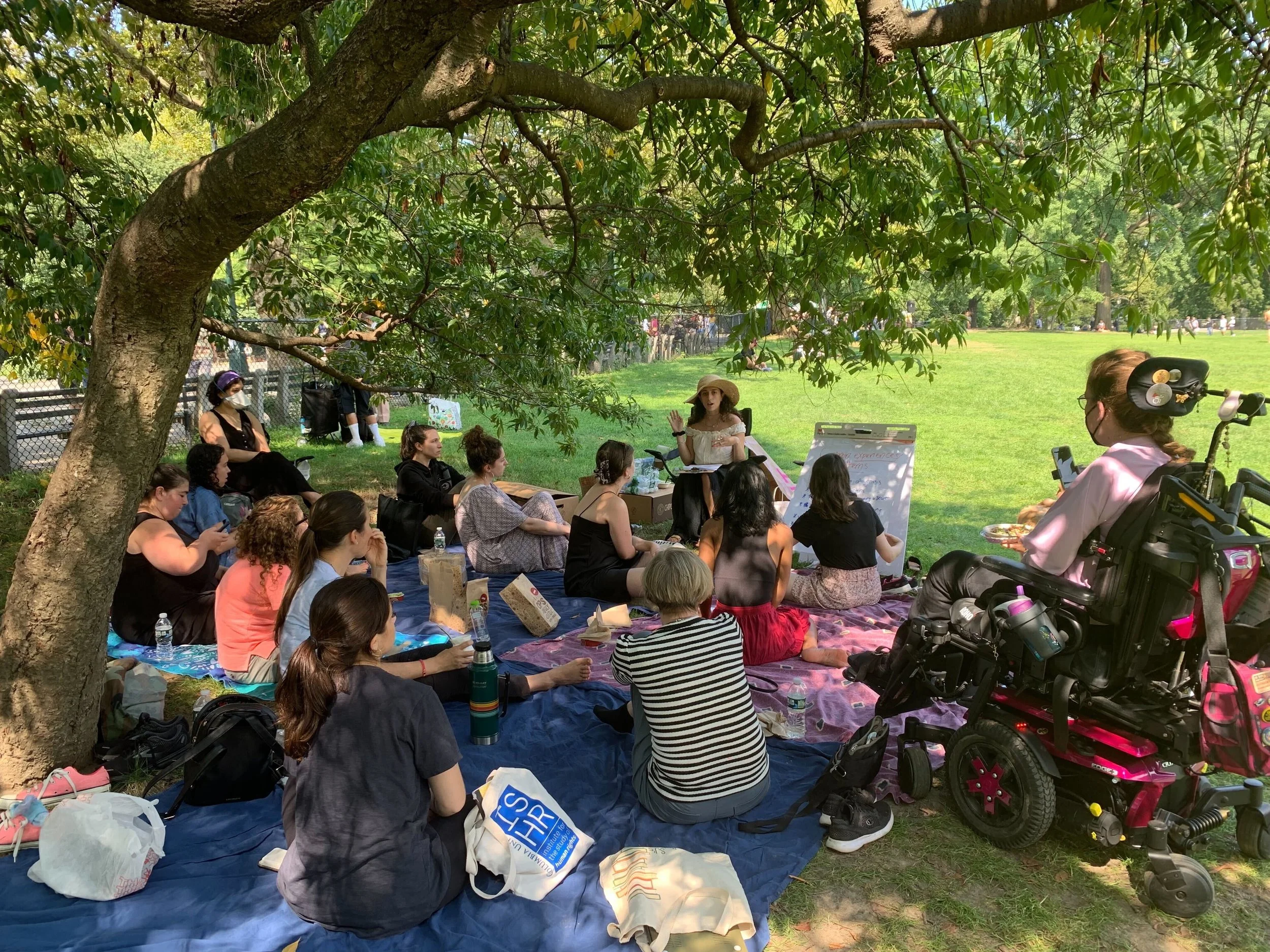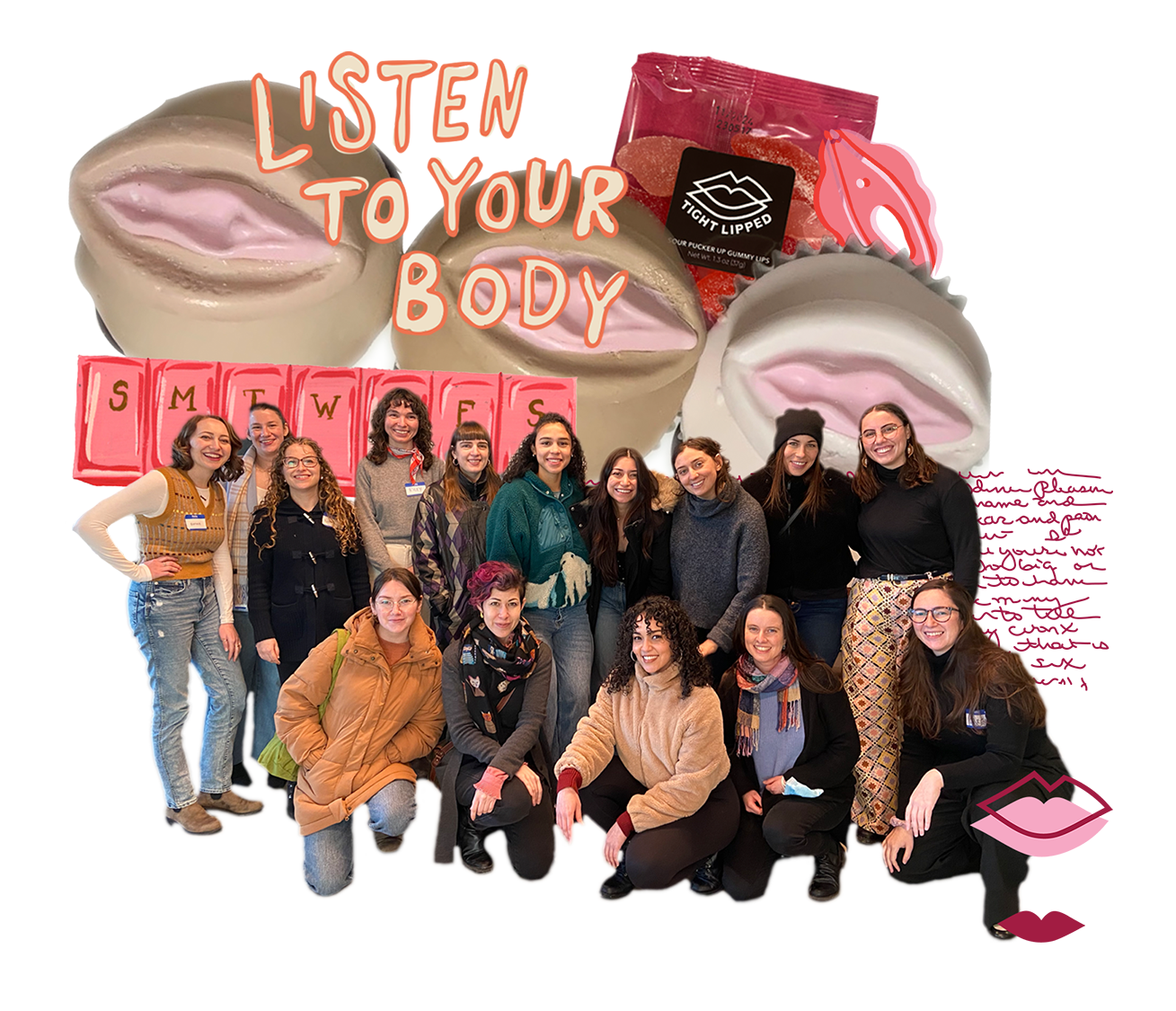
Tight Lipped is a grassroots movement by and for people with chronic vulvovaginal and pelvic pain.
Collage by With Care Creative from artwork by Amanda Forastieri, Sara Edwards, and Charlotte Milbauer

Mission
We fight for a world where people with vulvovaginal and pelvic pain are diagnosed correctly, treated effectively, and given compassionate care.

Vision
We share a vision of a world in which people with vulvovaginal and pelvic pain can lead full lives, free of societal stigma and free to access necessary medical care.
What’s vulvovaginal & pelvic pain?
This refers to a range of common conditions that can cause:
Vulvar burning, rawness, knife-like pain, and/or itching
Pain with insertion (tampon, speculum, finger, penis, etc.)
UTI-like symptoms
Pain with peeing, sitting, and tight pants
The source of these symptoms can be muscular, nerve-related, immunological, dermatological, and/or hormonal. Some names for these conditions include:
Pelvic floor dysfunction
Vestibulodynia (hormone-associated, neuroproliferative, or inflammatory)
Lichen sclerosus
And many others
To learn more about these conditions, check out our Resource Guide.
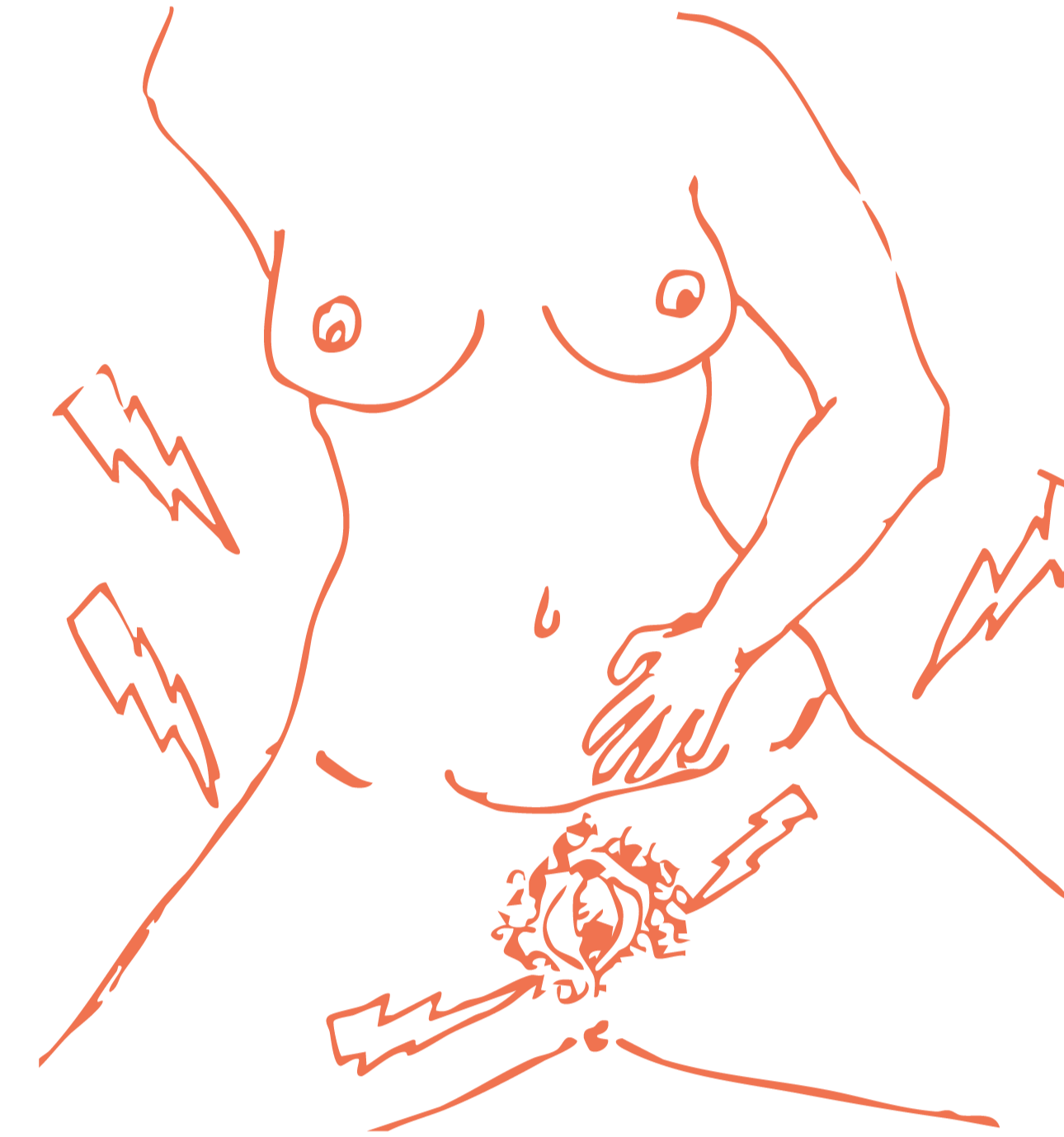
Artwork by Katy McFadden

The Problem
Vulvovaginal pain is often shrouded in shame, stigma, and silence. These conditions are under-researched, under-funded, and generally misunderstood by the medical community and broader society. Up to 1 in 4 people with vulvas will experience vulvovaginal or pelvic pain in their lifetime. Most of these patients will never receive a diagnosis or appropriate medical care.

The Solution
We believe that patients have the power to change how we’re treated, when we come together and organize. We advocate for meaningful and tangible change in how healthcare systems treat chronic vulvovaginal and pelvic pain. We fight for systemic changes so that all patients in pain can access the care they need and deserve.

Legacy
Vulvovaginal and pelvic pain conditions exist at the intersection of sexual and reproductive health, chronic illness, mental health, and disability justice.
When we, as women, non-binary, or transgender individuals, are dismissed and mistreated at the doctor’s office, it’s not an isolated incident. There’s a long history of hysteria and medical misogyny in the room with us. That’s why we need collective action to change the story.
We see our community organizing approach as building on decades of powerful patient activism. Just as breast cancer patients, AIDS activists, and pro-choice advocates destigmatized sexual and reproductive health and made it possible for people to talk about taboo health issues, so too will we normalize conversation around chronic vulvovaginal and pelvic pain.